
Back in September of last year, I treated myself to a birthday mug from my potter friend Hilary Wilson. I was initially drawn to the glaze—that’s what made me pick it up—but the moment I held it, I knew it was coming home with me. The rippled sides fit so comfortably in my hands, and since I don’t typically go for mugs with handles, the grip was everything.
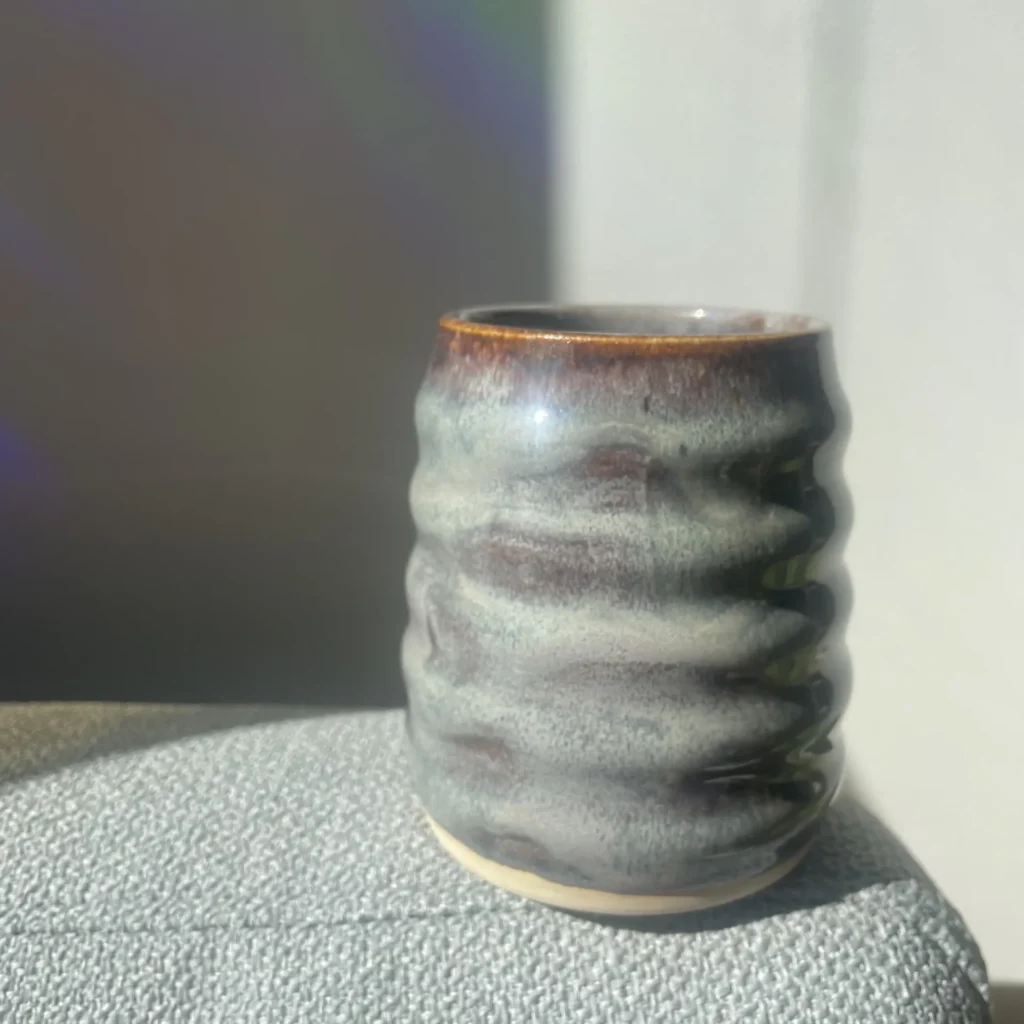
Every time I use that mug, I think about how I’d love to translate that feeling into glass—especially for a larger cup that holds a full tall can of beer or cider. A good grip is always something I consider when designing glassware. Not everyone has large hands that can easily hold a big cup, so I think a lot about accessibility—making pieces that feel great for all hand shapes and sizes.
I won’t go too deep into the making process here, but I do want to talk about the final look of these glasses. You’ll notice it’s quite a departure from my usual bright, opaque and transparent colours. Since this line is inspired by a ceramic cup, I wanted the surface to have a connection to pottery as well. I don’t have a way to mimic ceramic glazes exactly, but I’ve been drawn to the look of raku-fired pottery—metallic, iridescent, and rich with depth. It reminds me of the reduction colours we use in glassblowing.

Reduction colours contain metal oxides dissolved in the glass, and when the glass is exposed to a reduction flame (more gas/less oxyqen) a thin layer of metallic remains on the surface of the glass. This surface can vary wildly, from colour shifting to iridescent surfaces to metallic and reflective sheens and everything in between! It’s not an exact science, while you can repeat similar effects, no two pieces are truly alike thanks to the unpredictable nature of heat and quality of the reduction flame in the making process.
One of the most exciting differences between glass and clay is transparency, and it really shows with these reduction colours. From the outside, the glass looks opaque and metallic, but when held up to the light, the interior is full of colour, with no trace of the metallic sheen from the outer surface. Fascinating, right?
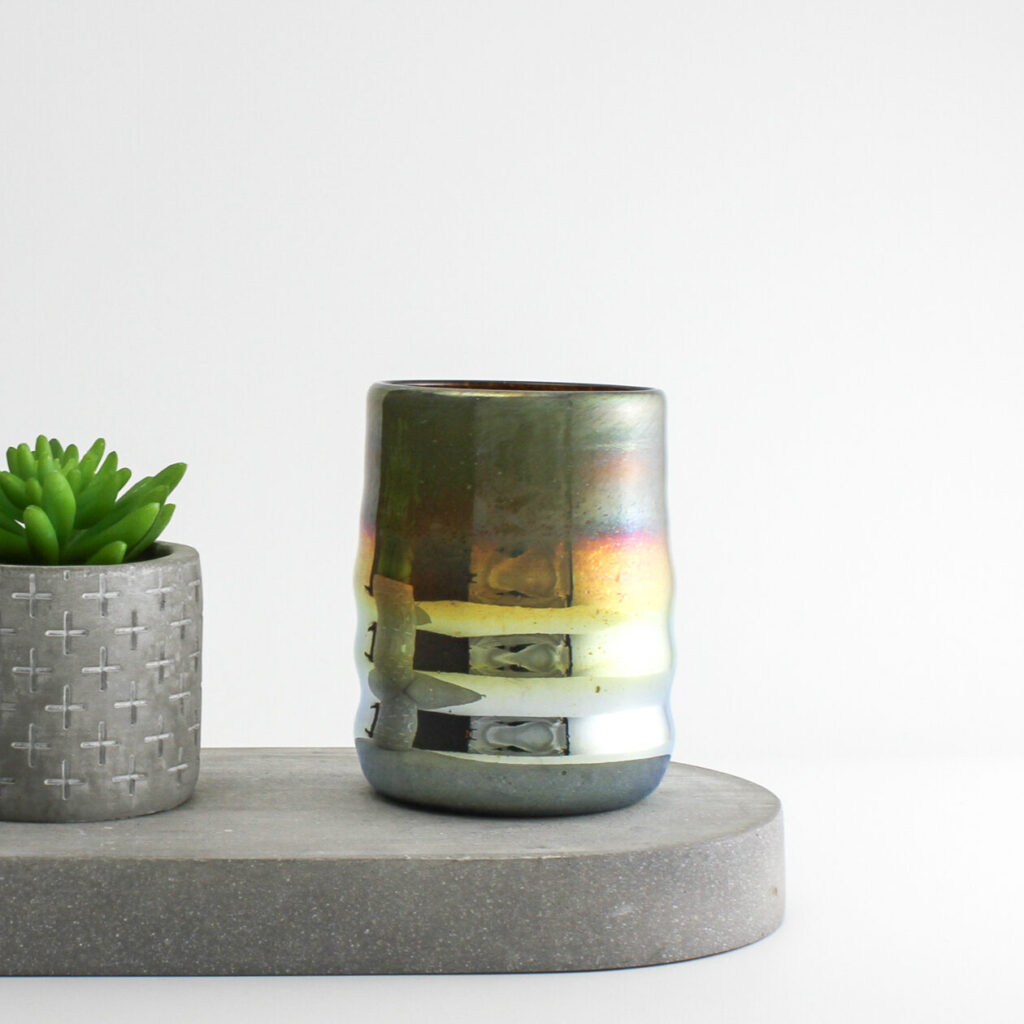
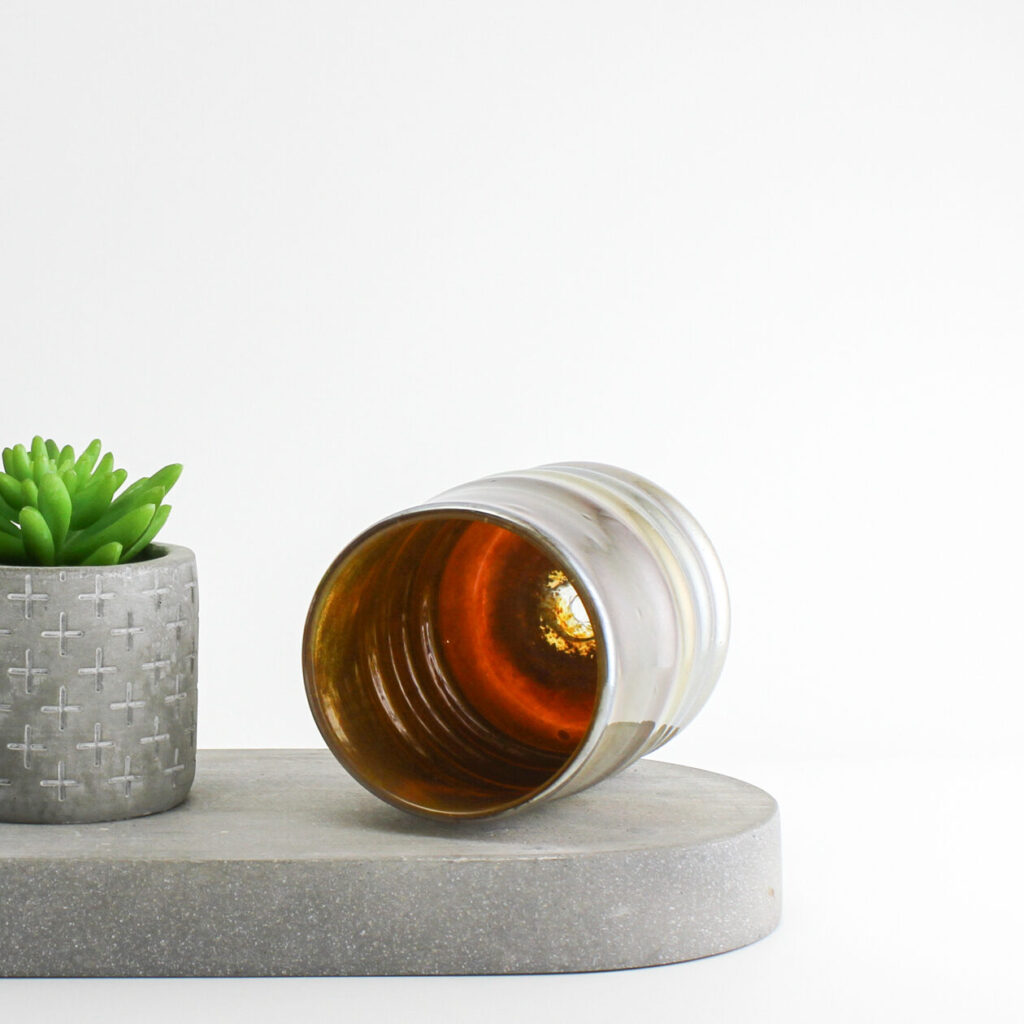
All in all, it’s a intriguing and mesmerizing surface—perfect for debuting the Ripple Glassware into the world. There will be more colours to come, but for now, these limited-edition metallic beauties will bring a luminous shimmer to your table.

